How does C. diff spread?
C. diff transmission
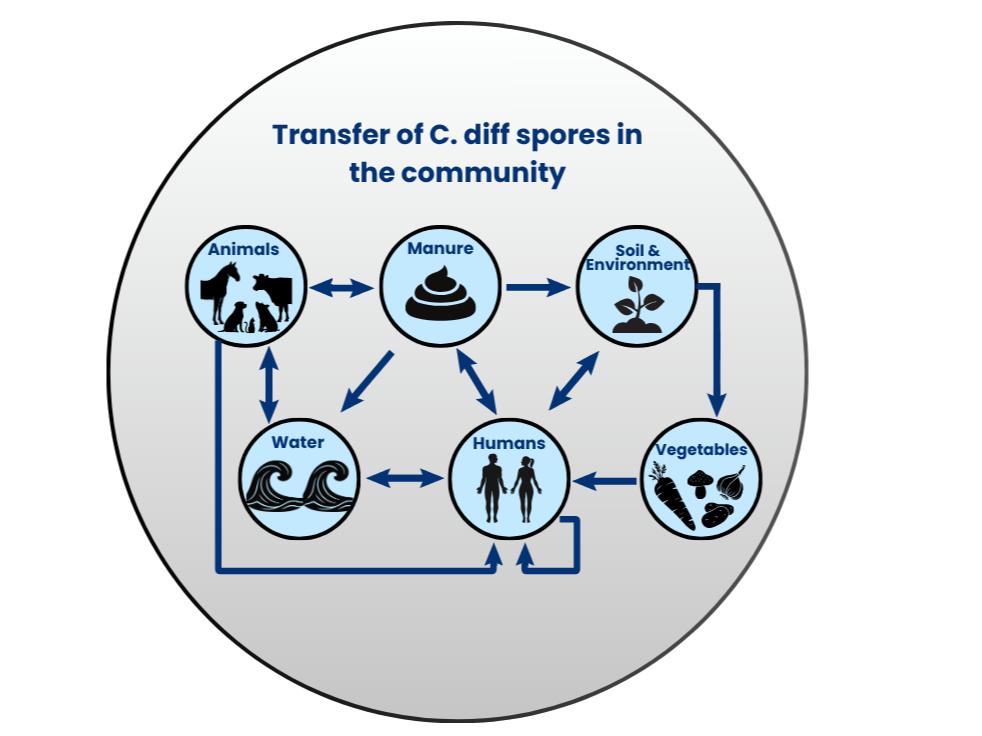
C. diff is spread by the faecal oral route, through contaminated surfaces and environments:
Outside the body, C. diff forms hardy spores that can live for a long time on household surfaces such as benches and floors, in soil and gardens and on animals.
Following contact with contaminated surfaces, the spores are ingested and are able to survive the harsh environment of the gut.
Once in the gut, C. diff may then produce toxins which cause symptoms such as diarrhoea and damage to parts of the gastrointestinal tract.
It is important to note that hand sanitisers and alcohol rubs DON’T kill C. diff spores. Washing your hands with soap and water and cleaning surfaces with bleach based agents is the best way to remove C. diff.
Those with a C. diff infection should limit contact with other people for at least 48 hours after the diarrhoea has stopped

C. diff In the community:
80% of cases in Australia are now “community associated” meaning many cases are being acquired whilst out in the community and in homes.
Studies have found C. diff in 30% of household samples (including surfaces around the home and pets), as well as in 60% of soils and gardens.
It is important for anyone who takes antibiotics, has a weak immune system, or is in an at-risk group to be aware of C. diff and how to prevent infection.
Healthcare providers should keep up to date with the changing trends in C. diff and consider potential community exposure and transmission in gastrointestinal investigations.

C. diff In healthcare:
C. diff is a known cause of diarrheal outbreaks in hospitals and care facilities.
Infection control measures such as patient isolation, PPE (gloves and gowns) and hand washing should be used in suspected cases.
The average length of stay for patients with a CDI diagnosis is more than five times longer (16.06 days) than the average hospital stay.
It is estimated that an initial infection with CDI can cost up to $18,795.00 AUD for admission and treatment of infection per separation.